
Cava Educator Advanced - Day 2
Highlights from the in person certification course organised by D.O. Cava
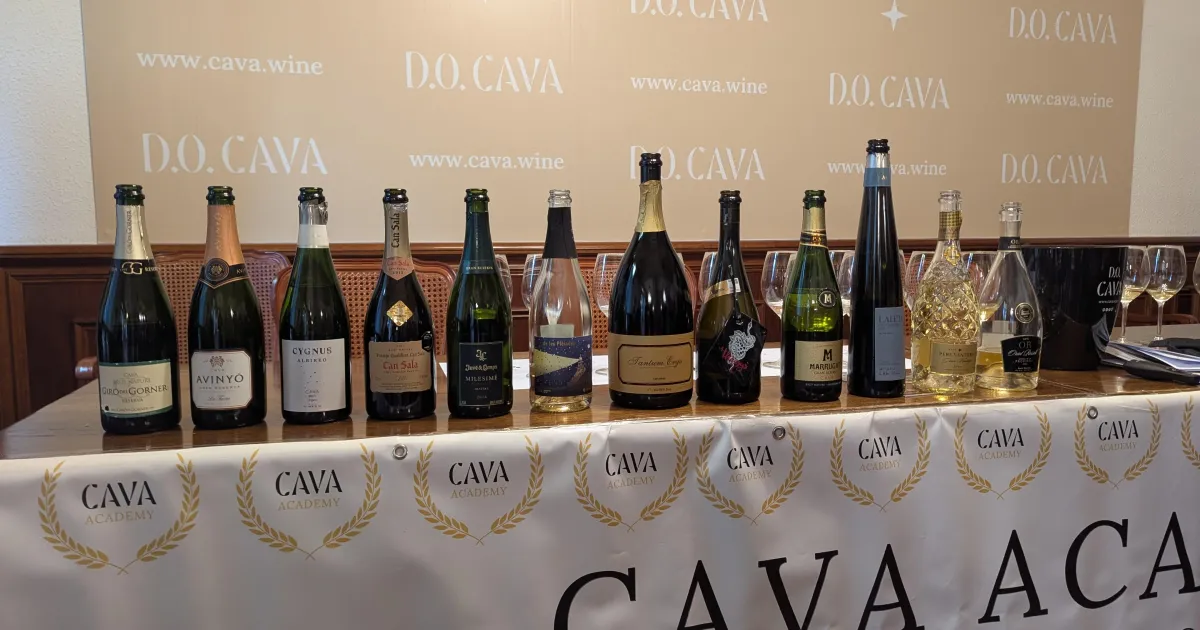
Cava is Spain’s largest sparkling wine, with 218mm bottles sold in 2024, also making it the world’s third largest sparkling wine. It is made in the traditional method, with second fermentation in bottle, and typically sold with minimal dosage (sugar added) 1.
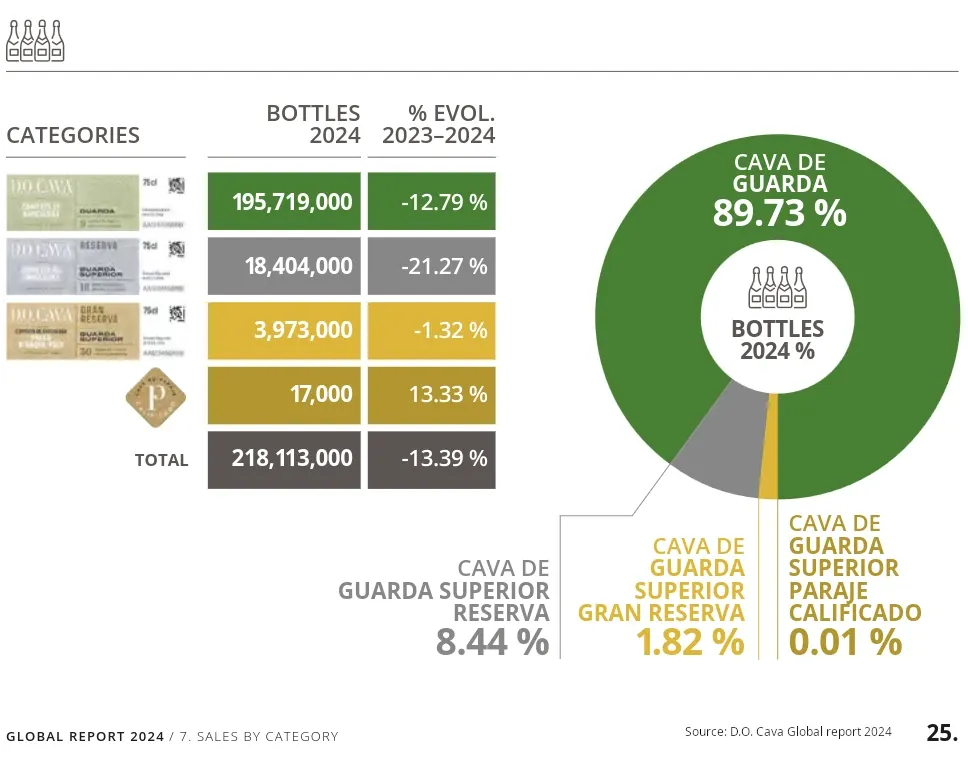
Cava’s regulatory body, the Denominación de Origen Cava (D.O. Cava), has pushed for higher quality standards in recent years. The new classification system has four categories, which primarily differ by ageing time on lees:
As can be seen in the above infographic from the D.O. Global report, the Guarda category is the bulk of Cava sales, with the remaining 3 categories being ~10%. Paraje Calificado is only 0.01%!
The majority of Guarda Superior sales are within the domestic Spanish market.
An interesting note is that producers of the Guarda Superior categories typically age their Cavas far longer than minimum standards, and it is common to see upwards of five years of bottle ageing in products just released on the market.
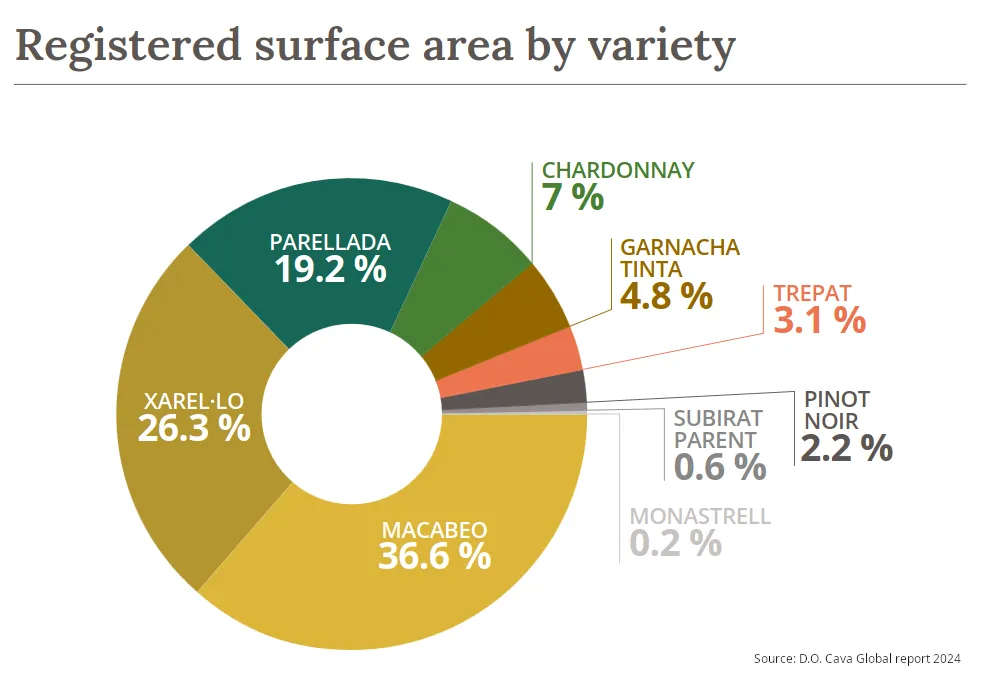
Cava uses three main grapes (Macabeo, Xarel·lo, Parellada), although six others are also used. As with other wines, the grapes used in the making of a wine determine its style, and also whether it is suitable for lees ageing and bottle ageing.
As part of the overall push for more brand awareness, the D.O. also created Cava Academy, which does online and in person certification courses.
I was fortunate enough to be selected for the 2026 Feb edition of the Cava Educator Advanced course, after having already completed the Cava Educator and Cava Expert courses 2. This was an in person course held in Sant Sadurní d’Anoia, which included lectures, winery visits, and a final exam.
Below are notes from day 1 of the course.
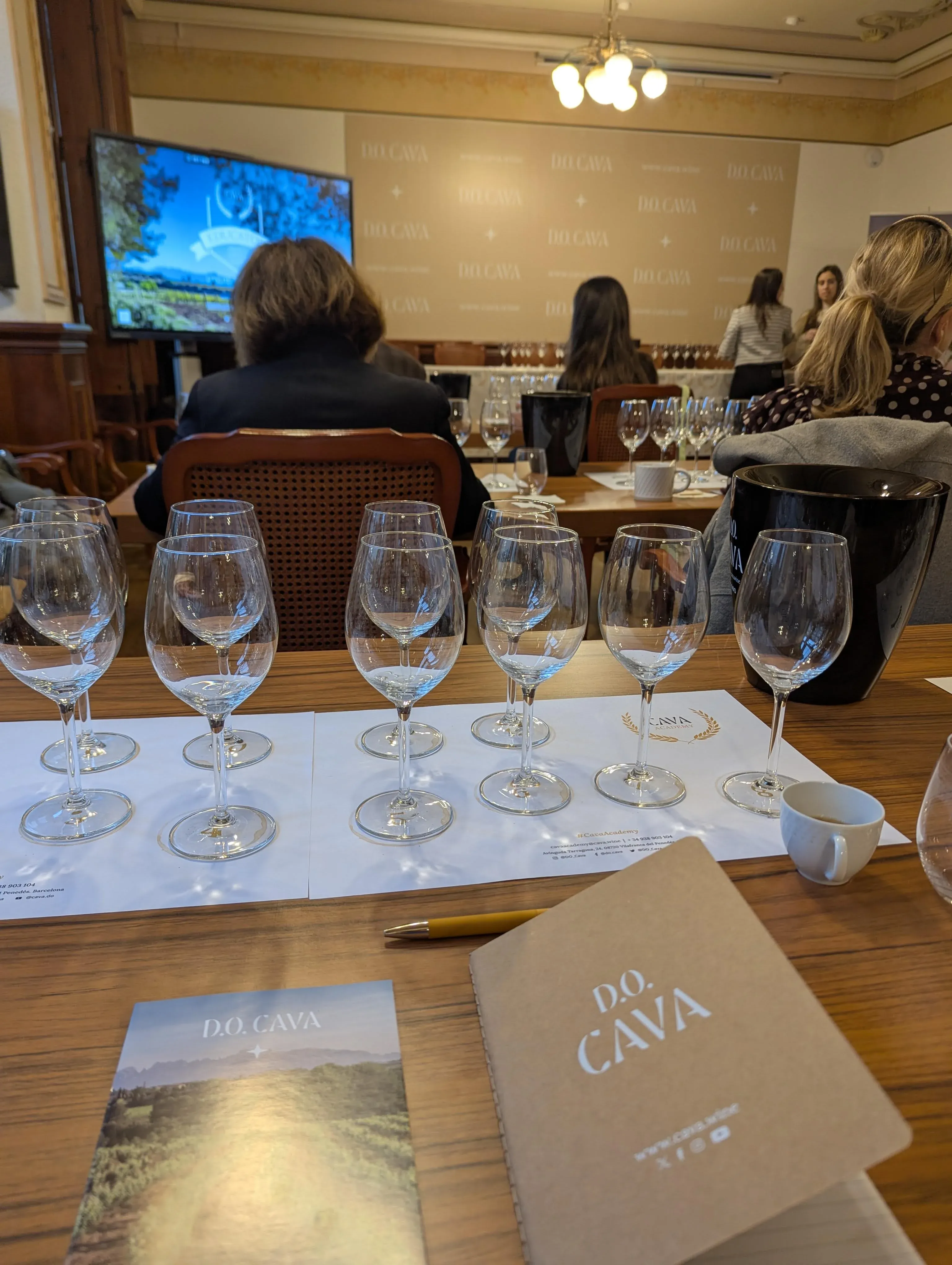
I’d arrived in Barcelona the night before, given the lack of direct flights that would have gotten me in on time for the morning pickup. After some confusion where I nearly joined the wrong bus group 3, I was on the right bus and headed to the D.O. office, which is about an hour out from Barcelona city.
Judith Manero of the D.O. opened the course by walking us through Cava’s history, recent regulations, and current trends.
Josep Raventos started Cava production in 1872, and today Cava is the only appellation in Spain which is 100% specialised in traditional method sparkling wines 4.
Cava was presented as being a combination of ‘landscape’ and ‘humanity’, with the mineral, clay soils and mediterranean climate combining with the human factors of grape growing and winemaking to create a special sparkling drink.
Two thirds of the vineyards in Catalunya are focused on Cava production. This consists of 343 wineries, of which ~200 make Cava, with the rest making base wine 5. The majority of production is by Freixenet and Codorníu for volume at a low price point; there has been a push for recognition of the higher price points (and higher quality) categories in recent years.
The higher quality categories refer to the Guarda Superior category mentioned in the intro section above. These are intentionally branded separately to distinguish them from the lower price point Guarda category, and have more stringent requirements.
For example, Guarda Superior is now 100% organic after recent efforts by the D.O. and growers.
Judith also made a special note of:
Paraje Calificado is the highest tier of Cava quality, with only 6 wineries qualifying for it at time of writing, for a total of 10 Cavas. A paraje is awarded for a vineyard area, similar to a Cru in France. Unlike a Cru, each paraje is owned by a single winery.
Wineries have to apply for the Paraje qualification with single vintage wines that have been on the market for at least five years, that come from areas distinguished by specific terroir characteristics. The tasting panel for this category is also different from the other Guarda Superior panels.
The Integral Producer stamp is Cava’s way of identifying producers who carry out the entire winemaking process from start to finish 6.
Regarding current trends, she mentioned that 100% Xarel·lo wines are being experimented with, due to their ageing potential. Rose wines also continue increasing in popularity.
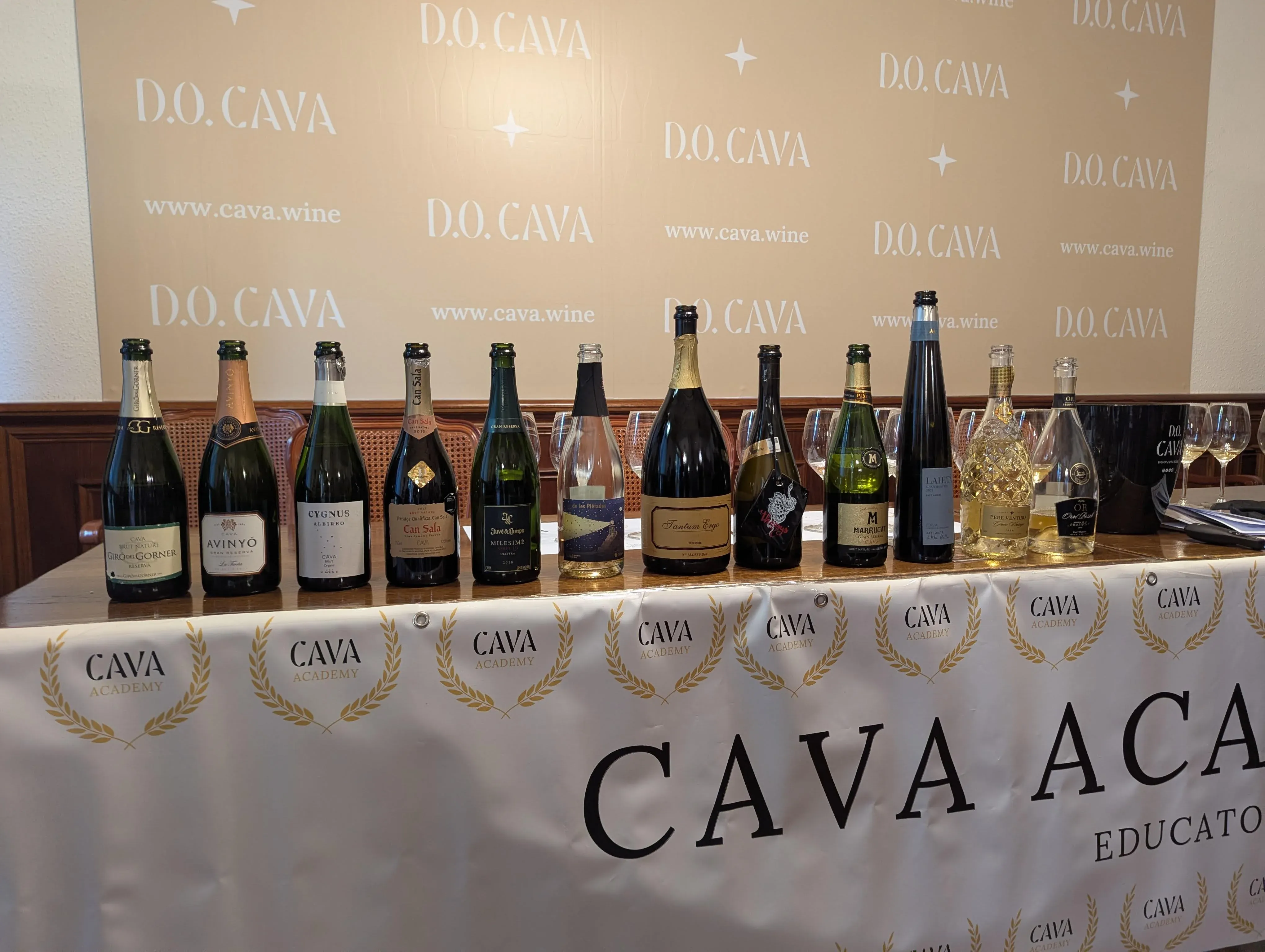
Next, David Forer MW led us through a blind tasting of various Cava flights. He noted that culturally Cava is less of a special occasion drink, and more of a ‘meet up with friends for tapas’ drink.
Separately, he mentioned how Cava has not required dosage for a while given the hot climate ripening grapes sufficiently, resulting in many Brut Nature (<3 g/l) wines. He also likes to age his Cava, unless they were already late disgorged.
The first flight we tasted showed how the difference in ageing times affected aromas and flavours. David finds that ageing in Cava tends to show most in the change from primary to secondary and tertiary notes, such as from fresh to dried fruit. This is in contrast to Champagne where the autolytic character comes through more.
The second flight showed the difference in the varietals. Typical markers for each were:
The third flight was our chance to identify age and variety. The dairy, goat cheese notes from aged Chardonnay in Cava helped me call one glass correctly. The earthy, herbal notes from Xarel·lo also helped our group identify the most aged wine. Identifying the two remaining wines that were mid-range in age and mixed varieties was difficult though. As always, blind tasting is a humbling experience.
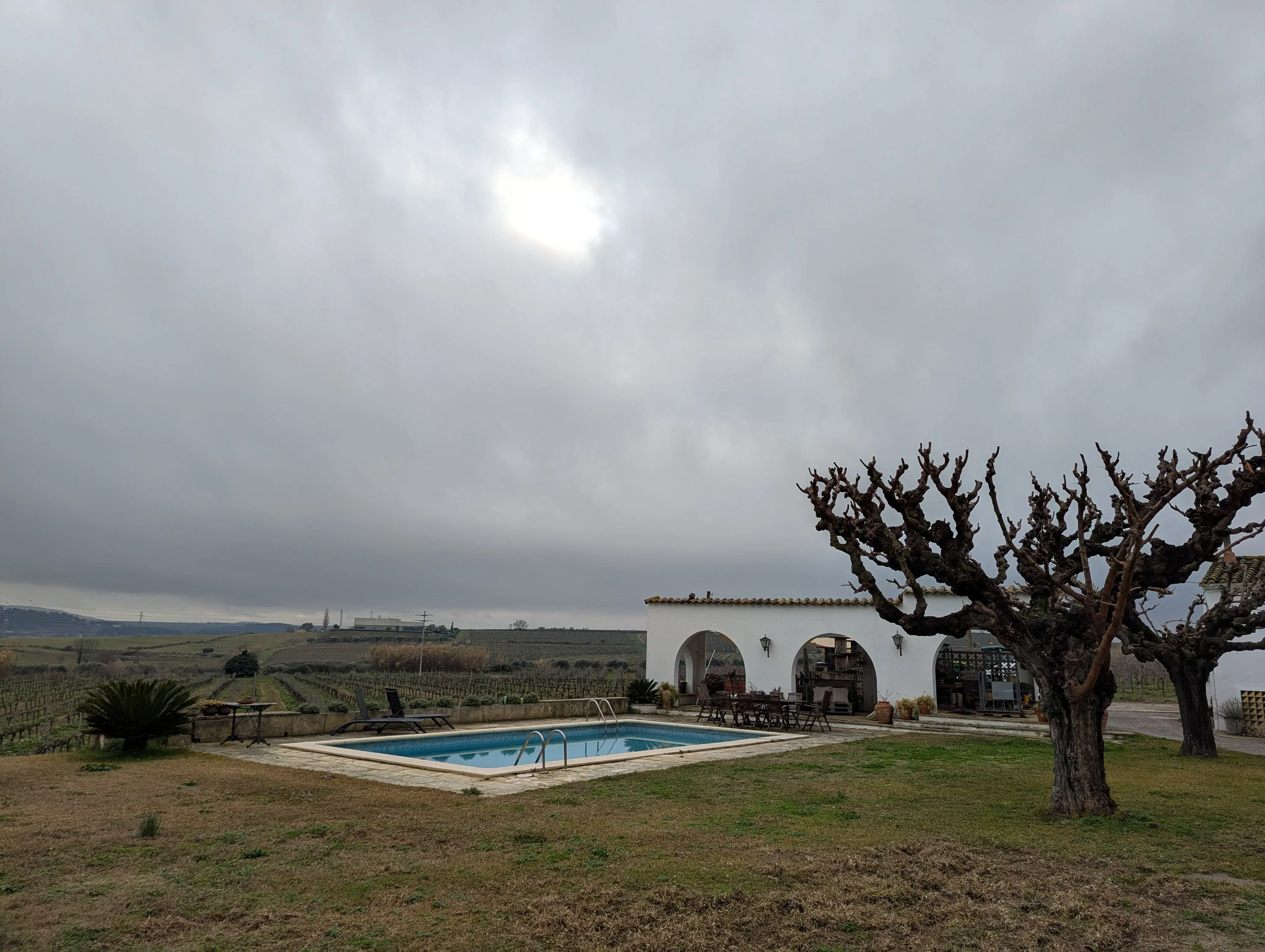
After lunch, we visited Oliver Viticultors. They have a long history as grape growers, and re-started making their own wines 11 years ago. Oliver has an estate closer to the sea, and another that is higher altitude with correspondingly cooler temperatures.
Oliver grows organically and biodynamically. They try to return what they use to the soil as much as, such as using pruned branches for compost rather than burning. They encourage natural grass cover, using the grass grown as an indicator of soil health.
Pruning is of high importance, since it determines the yield for the next year. It also requires higher skill and experience compared to harvesting 7, which is why they use the same team for pruning where possible.
They primarily prune using electric scissors or by hand secateurs, minimising the use of tractors. They dislike the compaction and contamination from tractor pruning.
Oliver has vines up to 90 years old. They view Macabeo and Xarel·lo as more important for Cava style. Xarel·lo has had issues lately due to the drought, with vines dying from the heat. They are replanting to replace the Xarel·lo, and also planting more of Malvasia, Garnacha, and Sumoll.
Their harvest is roughly 1.5 months long, typically in the order of Macabeo, then Xarel·lo, then Paralleda.
If you work so hard in the vineyard and then add so much sugar it doesn’t make sense - Oliver Viticultors
Oliver uses a pneumatic press and avoids oxidation as much as possible, also avoiding hotter midday temperatures.
They use both gyropalette and hand riddling 8. For their hand riddling, they have a special step in the process that they like to do for better integration of flavours 9.
They use a machine for disgorgement, and freeze the neck of the bottle before doing so. Their intent is to keep as much liquid as possible in the disgorgement process, as they typically make brut nature styles.
They like making brut nature as they want to showcase the result of their hard work from the grape growing process, and feel that adding too much dosage will mask that.
Most bottles age with crown caps, but they have noticed that cork can help with bottles that age on lees beyond five years.
For ageing, they like to focus on acidity and structure to withstand the ageing process. Their Gran Reserva style aims to be fresh, such that you want to keep drinking it, and not have so much body that you feel full early.
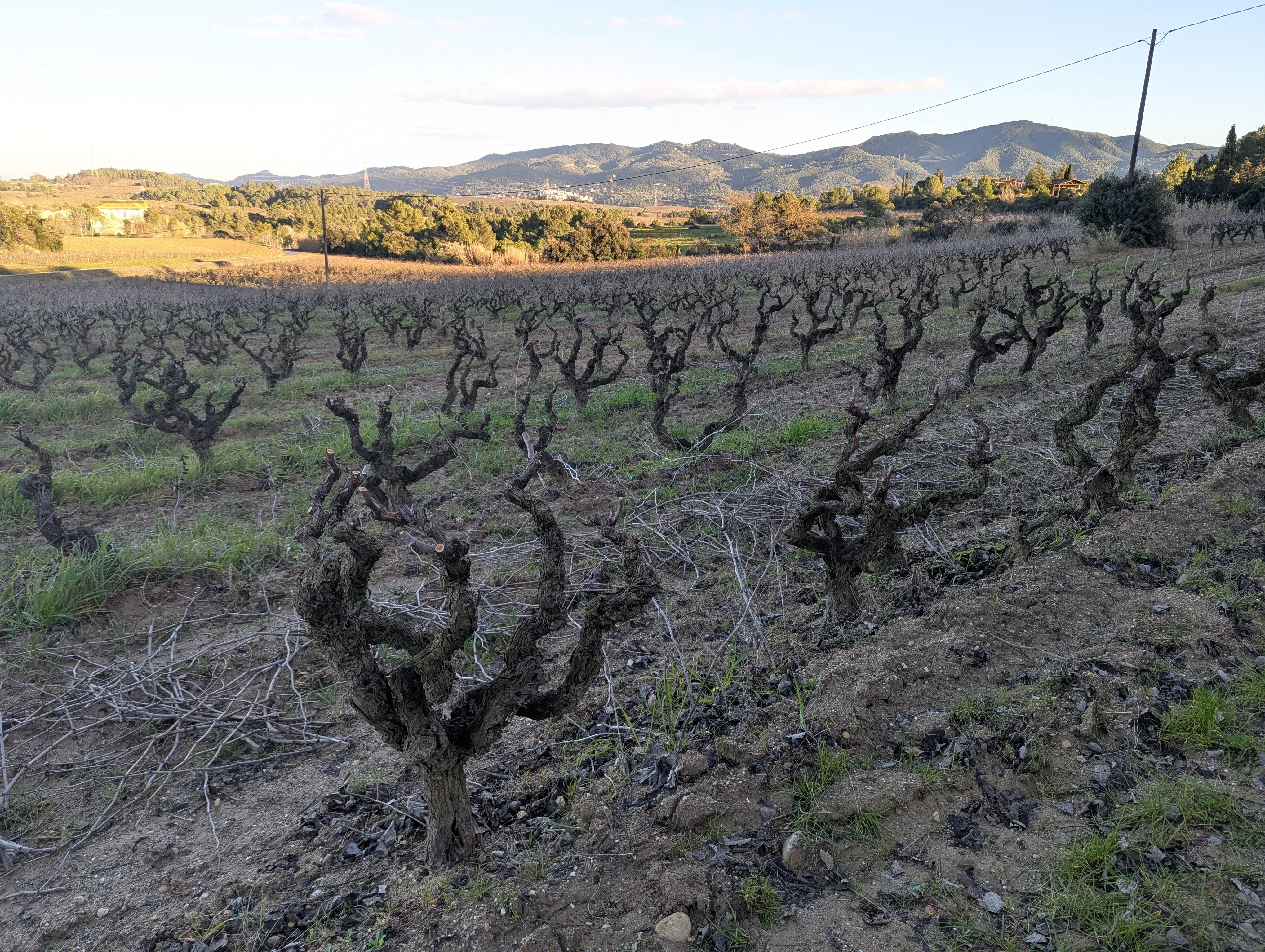
We then headed to Vins El Cep, which was born from the union of four winegrower families in 1980, and dates back even longer to 1448 if counting the wine growing years.
They are essentially a small private co-operative, with each family managing their own estate, selling grapes but also making wine.
Their location has a mosaic of soils, more sandy than clay, which gives more minerality in the wines.
Vins El Cep is one of the wineries that has a Paraje Calificado, Can Prats. They qualified for this using a plot each of their Macabeo, Xarel·lo, Parellada, with the combined 3 plots forming the paraje. They feel that the paraje qualification is more specific than the Grand Cru qualification in Champagne, as parajes are smaller areas 10.
They like Xarel·lo for the body and structure, and Parellada for the floral aromatics.
They do also plant other varieties, having planted Chardonnay and Pinot Noir since the 1990s 11.
They taste every three months to check for quality. They typically age their paraje wines in cork, as they also feel this is better quality for ageing longer than five years on lees.
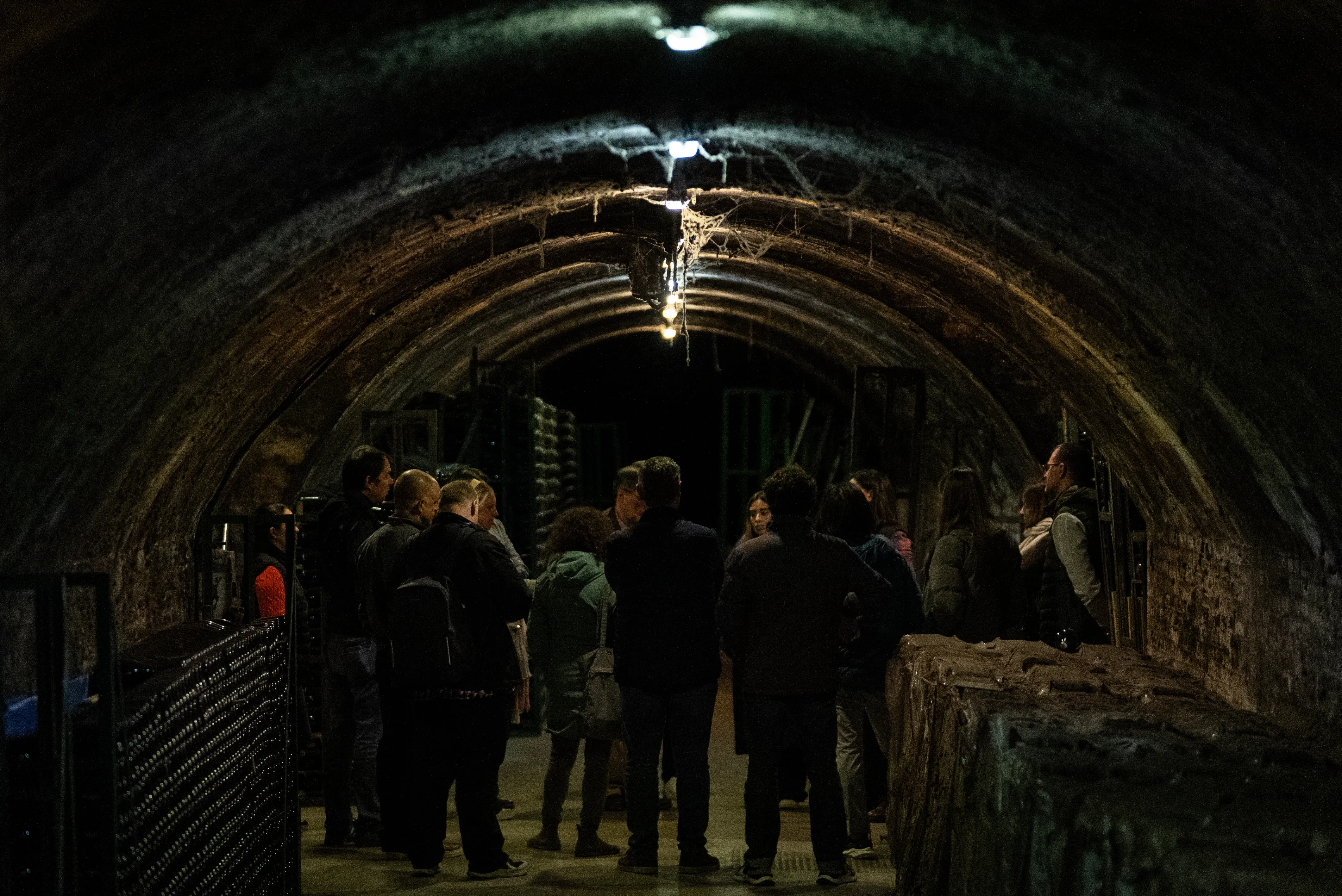
Our final visit of the day was to Pares Balta, to learn more about the traditional method from Marta Casas 12.
Pares Balta has been certified organic since 2002, and biodynamic since 2012. They are one of the few Integral Producers of Cava as well.
Some details discussed included:
If a bottle was from the 2019 harvest, it typically requires 3 weeks of fermentation, and more weeks for clarification. This results in tirage in 2020 13. Hence, five years of lees ageing would imply a 2025 disgorgement date for the 2019 harvest, not 2024
They like to use 24g of sugar for tirage in Gran Reserva vs 20g of sugar for other categories, due to the longer ageing time of Gran Reserva resulting in more pressure lost
They use cork for their Jeroboam bottle size as their machines can’t fit crown caps for these
We ended our day later than scheduled due to asking too many questions on our visits, as can be expected. Judith and Andrea (also from the D.O.) did an admirable job trying to keep us on schedule; if left to our own devices we would probably have spent the entire day at the first winery.
After checking in to the hotel, we also had a group dinner, which was a fun experience where I learnt what a porrón was and on an entirely unrelated note, have to hope that some videos never become public.
Dosage refers to the sugar added in the liqueur d’expédition to top up sparkling wines after disgorgement. Cava is typically in the Brut Nature (<3 g/l) to Brut (<12 g/l) range ↩
Cava Educator is primarily online, includes a tasting and online exam. Cava Expert requires submission of a thesis. ↩
In my defense, I heard someone say “DO” while looking for a bus and thought they meant the Cava D.O. Not in my defense, the itinerary did show us where we should be meeting, including a picture of the stop ↩
There are other sparkling wines, and traditional sparkling wines from Spain, such as Corpinnat or Classic Penedès. Long story for another day ↩
Base wine being used as the initial wines for blending in Cava production. The winery would make base wine from grapes and then sell to a Cava producer ↩
Producers can buy grapes but cannot buy wine. I’m assuming this is due to the historical context of wineries supporting many smaller grape growers. ↩
The son noted how he had pruning classes as part of his degree, but the real world is messier than classroom conditions, and he defers to his dad’s experience in pruning ↩
Riddling is a process in sparkling wine production where the bottles with yeast still inside them are turned slowly so that the yeast eventually falls to the neck of the bottle and can be removed. As the thick part of the yeast falls faster than the thin part, rushing this process results in hazy wine rather than clear wine. ↩
I won’t detail this just in case it was sensitive information ↩
If you submit 3 plots for the paraje qualification, you can blend grapes from those plots. However, if you had only submitted the Macabeo plot, you would not be able to blend the Xarel·lo or Parellada for your paraje wines ↩
They have other varieties beyond these as well but I didn’t have time to write them down. I believe there was a Tempranillo? ↩
Marta was recently awarded Winemaker of the Year in Catalan ↩
Additionally, there is both a regulatory requirement for January tirage, and scheduling of inspections required ↩
Highlights from the in person certification course organised by D.O. Cava

An analysis of Cava's market position, growth opportunities, and strategic marketing approaches to compete in an evolving sparkling wine market
Details about Port from the book by Richard Mayson
Comments