
Cava Educator Advanced - Day 1
Highlights from the in person certification course organised by D.O. Cava
This is notes from the second day of the Cava Educator Advanced course, see here for the introduction and notes from the first day.
The second day included two winery visits and our exam.
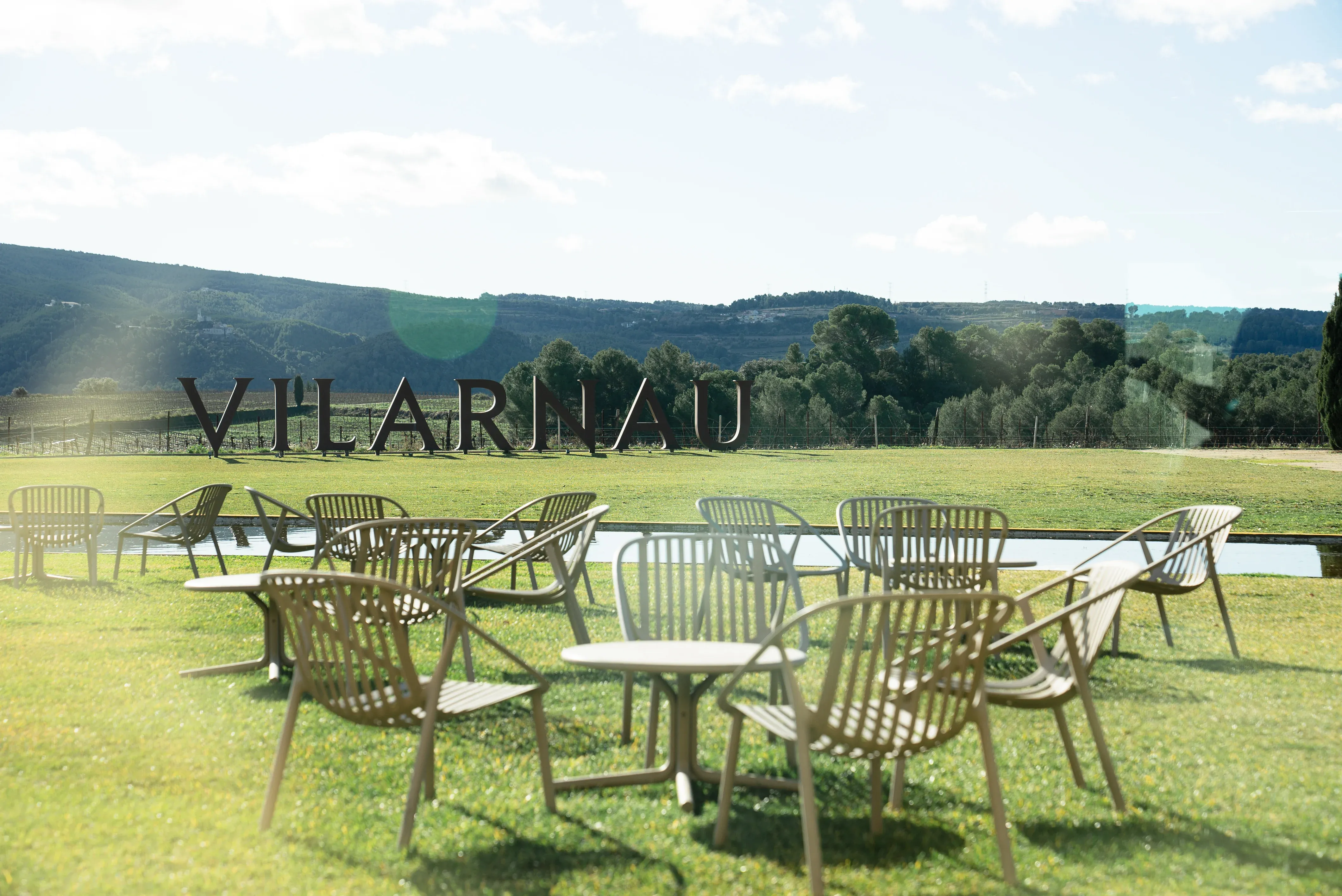
My life is here. [We have a] long history, it’s my legacy - Eva Plazas Torné
We started the day with a visit to Vilarnau to learn more about their winemaking process, and the coupage (blending) process in particular, from winemaker Eva Plazas Torné.
Vilarnau dates back to 1448 as grape growers, and was bought by Gonzalez Byass in 1982.
They have a 20 hectare estate, mainly in the valley area between Montserrat and Serralada Litoral. They also buy grapes from growers they contract with 1.
Their soil typically has 3 layers, of clay, pebbles, and sand.
Their grape growing is 100% organic. They do use irrigation in line with regulatory standards, which can be important for chardonnay in years of drought.
There has been a push for more sustainability as well, such as usage of solar panels, biomass boilers.
Climate change has resulted in a different order of harvest than usual, with Macabeo now being harvest even earlier than Chardonnay or Pinot Noir might have been.
Overall, harvest times for all varieties are also moving earlier. They typically harvest from August to September. They harvest at night by machine, and up to midday by hand.
They like to prune Chardonnay and Xarel·lo later, because these two varieties are more sensitive to spring frost, due to budding early but ripening relatively late.
Eva presses without stems as she prefers high acidity for the base wines, and stems are typically too green given the earlier harvest time 2.
They use a pneumatic press, and the second press fraction is typically for distillation and not wine production.
Temperatures are cool during pressing to retain aromas, and particularly cooler for Parellada.
She likes using specific commercial yeasts for the first fermentation, each grape variety getting its own yeast. Fermentation typically takes 20 to 30 days. She has been experimenting with chestnut barrel fermentation for Xarel·lo, and we got to try one of these as well.
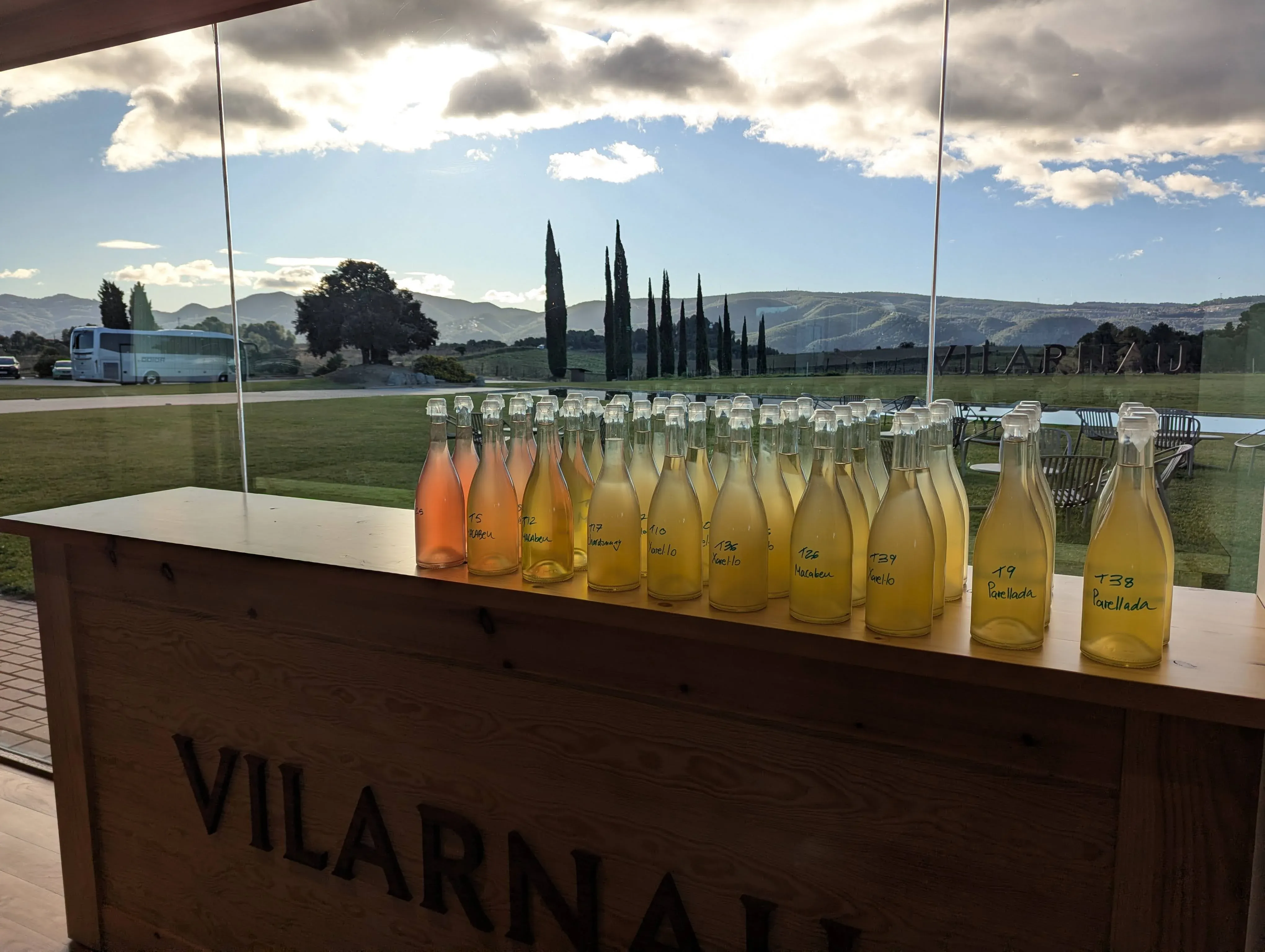
We also got to try our hands at making our own blends!
We were given a variety of base wines of different varieties with different alcohol and acidity levels, and told to create a blend that we liked.
The two main questions to answer before blending are:
This is how she views the grape varieties:
Wines that are meant to age require higher acid, as they will not have life and encounter oxidation problems without enough acid.
She tastes every 6 months to check for quality.
She has also been experimenting with using less bentonite in clarification 3.
Our group experimented with many blends in an attempt to make a Gran Reserva (non-rose), and it was difficult to decide between which we liked more on tasting, and which we thought would hold up with age. Despite that, we won and got to take home some Vilarnau honey as a prize 4.
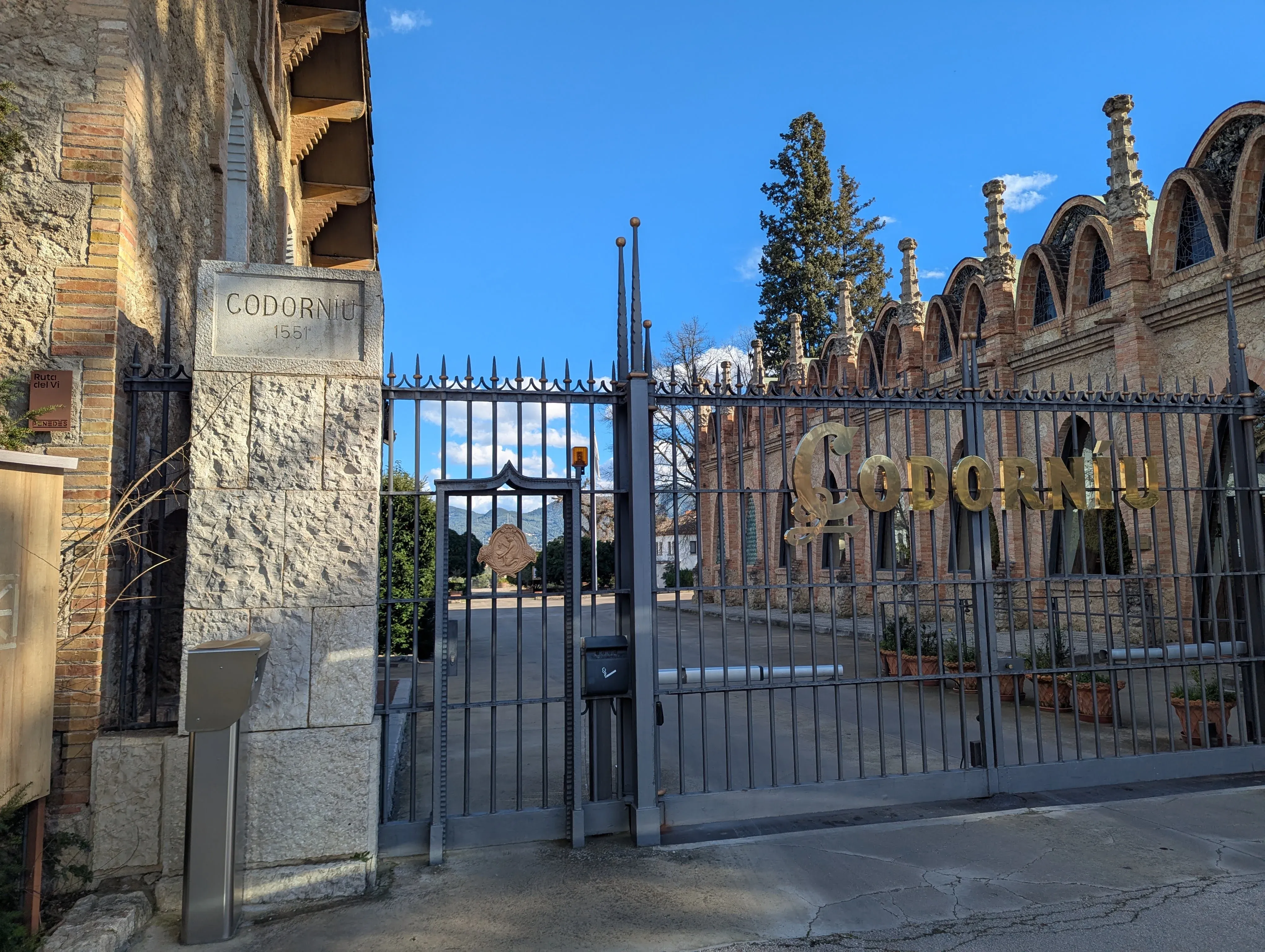
Next, we visited Codorniu for a tour of the estate and lunch.
Codorniu is one of the largest producers of Cava, with historical documents dating back to 1551 showing the owner making wine then.
Codorniu produces for both ends of the market, making about 45mm bottles annually but also owning 3 parajes for the highest quality Cava production.
Our visit was focused more on the history of the estate and less on the grape growing and wine making. We learnt that they have 30km of cellar space, with >60mm bottles stored, and got to tour part of the cellars as well.
We had lunch at Codorniu, where we had an excellent pairing of their Gran Reserva, Paraje, and Rose with our meals 5.
After that, it was time for our exam back at the D.O.
The exam was harder than expected, and I do wish there had been more study material provided, or that I had prepared more beforehand by revising other material on the D.O. website.
That said, I still passed! That means I have a Cava Educator Advanced certification now.
We finished with a certification presentation ceremony and a short celebration, before most of us had to catch the bus back to the airport or Barcelona city center.
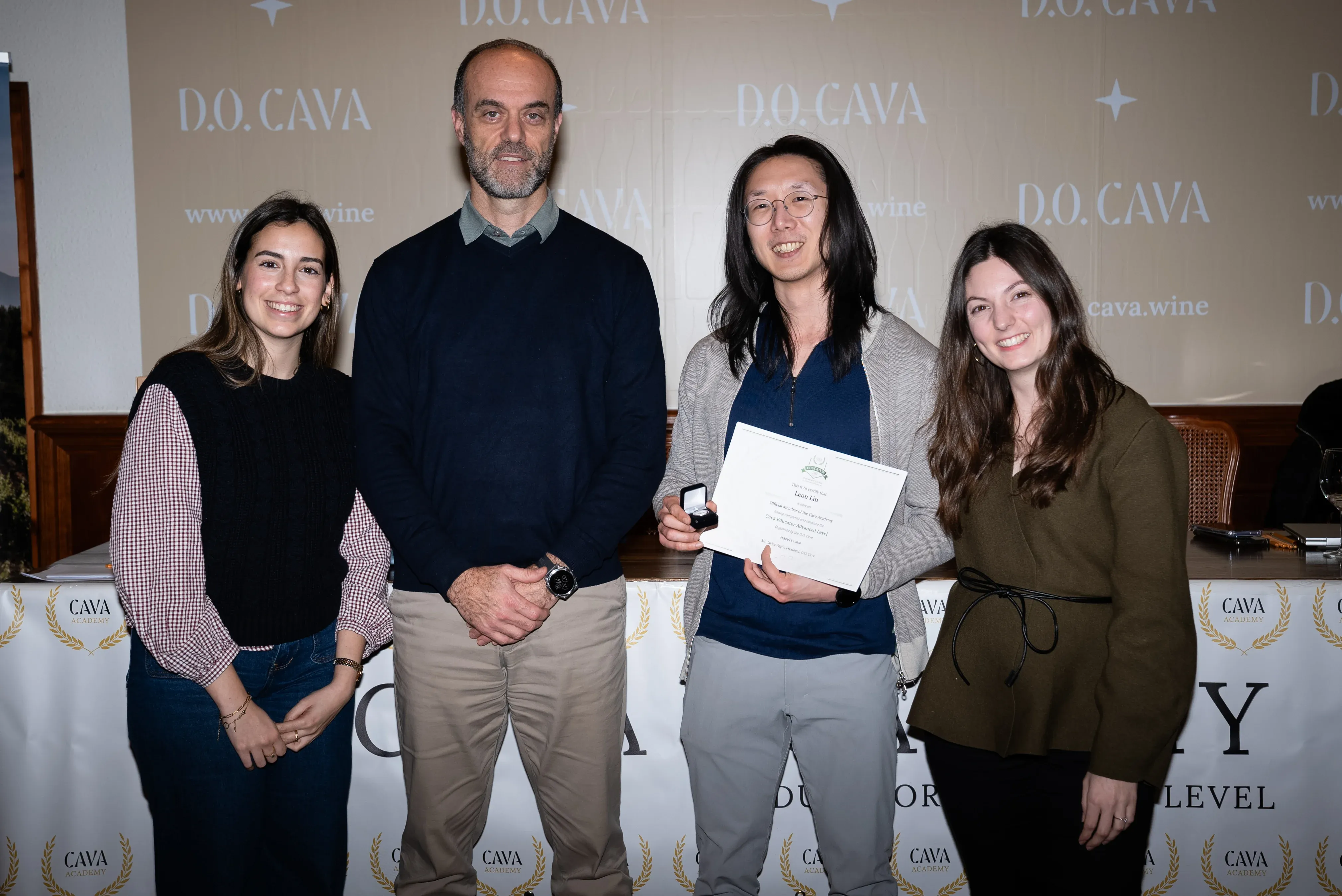
I’m grateful for the opportunity from the D.O. to take this course, which was a fantastic experience. Judith, Andrea, David, and everyone from all the wineries (Oliver, Vins El Cep, Parés Baltà, Vilarnau, Codorníu) provided both an educational and fun journey through all parts of the Cava production process.
I would highly recommend anyone interested in sparkling wines or Spanish wines to go through the various levels required to be eligible to apply for this course, and then experiencing this yourself in person.
Moving forward, I’m also looking for more opportunities to promote Cava both in NYC and in Singapore.
Their typical contract is for 5 years, and they frame this as a partnership to help protect growers survival. ↩
She might retain stems for still wine production as they will be less green by then. ↩
Bentonite is a type of clay that helps to clarify wine, but there is a concern that using too much of it can strip flavour as well ↩
This might have been due to other groups being disqualified due to mixing some of the Garnacha provided to us, in an attempt to make rose blends. Turns out, this is not allowed by regulation, and rose must be made from grapes directly and not base wines. Sneaky. ↩
We got to taste their La Pleta Chardonnay Paratge Qualificat from 2014, which was one of 3377 bottles from that vintage. Paratge Qualificat is Catalan for Paraje Calificado ↩
Highlights from the in person certification course organised by D.O. Cava
An analysis of Cava's market position, growth opportunities, and strategic marketing approaches to compete in an evolving sparkling wine market
Details about Port from the book by Richard Mayson
Comments