
Chianti Classico NYC 2026 tasting
Notes from the industry tasting event in NY
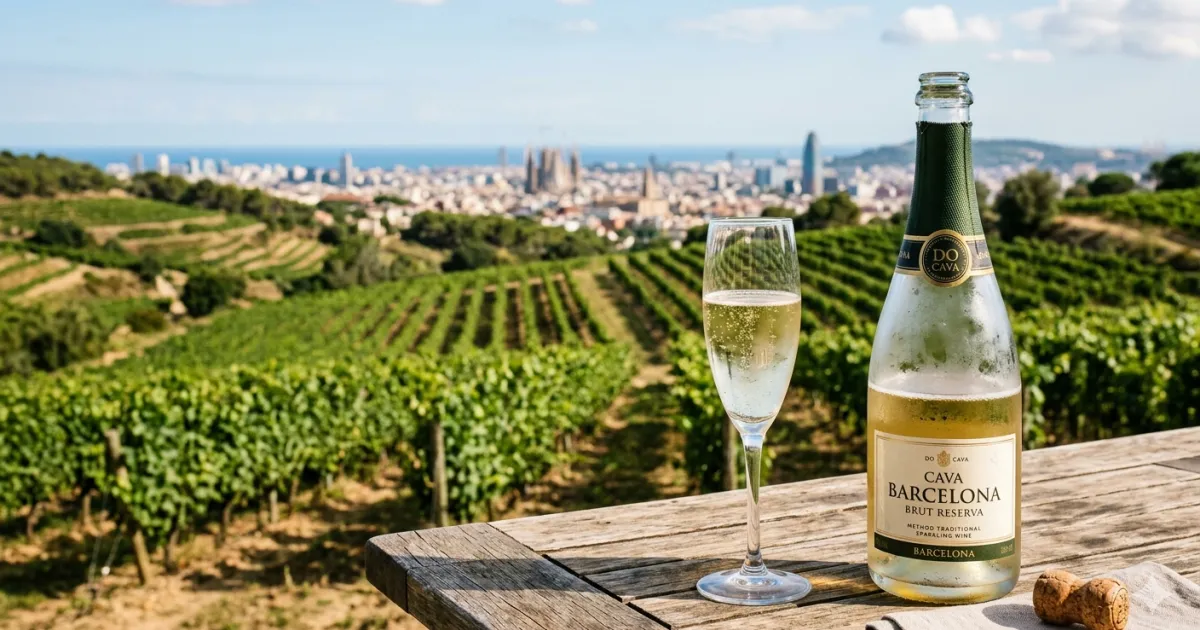
If you are standing in front of a shelf of Cava, the label can tell you more than most beginners realize. The most useful clues are usually sweetness level, ageing tier, and sometimes producer quality signals. Once you understand those three things, it becomes much easier to guess whether the bottle will be fresh and simple, or more serious and complex.
In practice, the most helpful terms to look for are Guarda, Reserva, and Gran Reserva, representing the ageing tier. Some indication of Brut, Extra Brut, Brut Nature is also helpful. These are the easiest way to infer the style and quality of the Cava.
Cava is especially worth learning about, because it often sits in a sweet spot for value in sparkling wines. It is usually more serious and structured than entry-level Prosecco, but often far less expensive than Champagne. If you like sparkling wine and want to buy more confidently, learning to read a Cava label is an easy win.
I personally have a soft spot for Cava, given my Cava Educator certification and great experience in Barcelona while taking the certification.
For quick background, see the Cava Wine Style, Penedès Wine Region, Xarel·lo Grape, Macabeo Grape, and Parellada Grape hubs.
A Cava label can tell you five useful things very quickly:
For beginners, the first two matter the most. If you can spot the sweetness term and the ageing tier, you already know a lot about what to expect.
If you only have half a minute, look for these things in this order:
Sweetness term
Look for Brut Nature, Extra Brut, Brut, which would be the most common sweetness levels.
Ageing tier
Check whether it says Guarda, Reserva, Gran Reserva, or Paraje Calificado.
Producer quality cue
If you see Integral Producer or Elaborador Integral, that is typically a positive sign.
Vintage and grape information
Helpful, but secondary for a beginner.
A simple buying shortcut:
Cava is Spain’s best known and most produced traditional method sparkling wine. Traditional method meaning that it is made with a second fermentation in bottle 1, the same method used in Champagne and Franciacorta. Cava is a regulated wine category with its own rules, producers, grape mix, and ageing system.
For a beginner, the important point is that Cava is not trying to be Prosecco. It tends to be drier, more structured, and more tied to bottle ageing periods. In price and style, it often lands somewhere between simple Prosecco and Champagne, which is part of why it can be such a good buy. In my experience many Cavas also age on the lees far longer than minimum requirements, making them excellent value for people looking for aged sparkling wines.
Cava is also culturally a little different from Champagne. It is often less of a luxury-only, special-occasion wine, and more of an everyday sparkling wine for food, tapas, and gatherings. That practical, food-friendly side is part of its appeal.
If you are new to Cava, these are the terms worth learning first:
Brut Nature is one of the most common terms beginners notice on a Cava label, and it matters because it tells you the wine is very dry. It is the driest sweetness category in Cava, with up to 3 grams per liter of sugar.
In practice, Brut Nature means there was little or no dosage (sugar) added after disgorgement 2. In Cava, this style is especially common because the climate often ripens grapes well enough that producers do not need much sugar for balance.
For a beginner, Brut Nature is useful because it is both a style cue and a buying cue:
That said, dry does not automatically mean better. A good Brut Nature can be lean and crisp, but some wines benefit from a little more softness. Think of it as a style decision, not a prestige guarantee.
Brut Natures cater towards the demand for drier wines in recent years. If you’re looking for some amount of dosage, Extra Brut has up to 6 grams, and Brut has up to 12 grams of sugar. I personally like some dosage, as I’ve found the wines more balanced and easier to drink on their own 3.
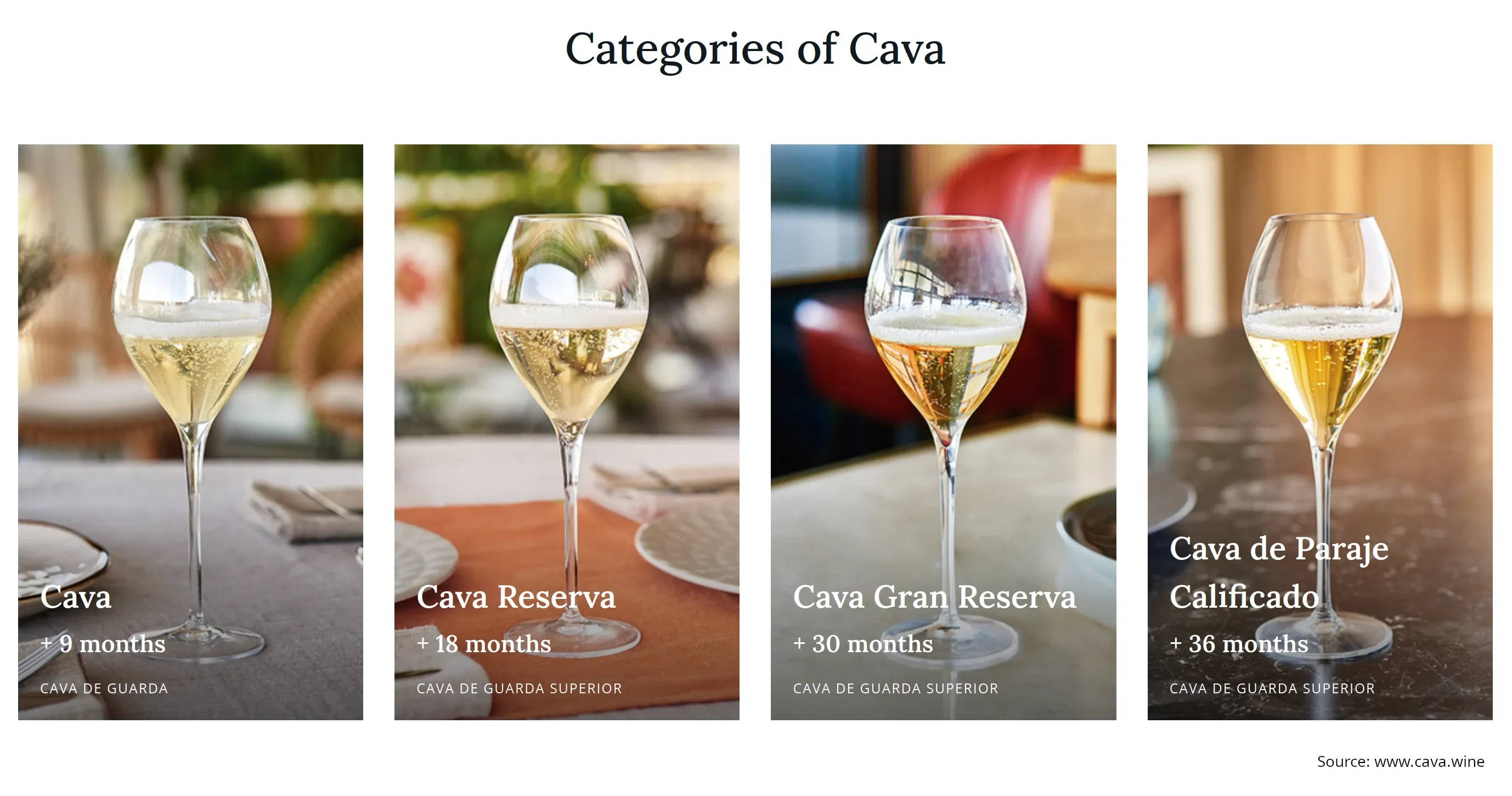
This is the part of the label that usually tells you the most about the wine’s seriousness.
Cava de Guarda is the basic ageing category. It requires a minimum of 9 months of lees contact.
Lees are the dead yeast left in contact with the wine during bottle ageing. That contact helps build texture and complexity over time.
Cava de Guarda is the broadest and most commercially important category. Many bottles in this tier are made to be fresh, lively, and affordable rather than deep or age-worthy. In terms of volume of production, most Cava falls within this category.
What to expect:
I have found that some Cava de Guarda at the lowest price points have an unpleasant smoky, petrol aroma, which is likely due to the underripe Xarel·lo grape used for bulk production.
Reserva sits within the broader Cava de Guarda Superior category and requires at least 18 months of lees ageing.
This is often where Cava starts to become more interesting for beginners who want more complexity. There is still freshness of fruit flavours, but the longer ageing usually adds more texture and some developed flavours.
What to expect:
The pricing of Reserva Cava tends to be good and not that much higher than Cava de Guarda.
Gran Reserva requires at least 30 months of lees ageing.
Given the ageing length, cavas in this category tend to have dried, aged fruit flavours, more integrated mousse, and lose some of the fresh fruit aromas.
What to expect:
Paraje Calificado is the rarest and highest category, requiring at least 36 months of lees ageing along with much stricter criteria. It is tied to a specific vineyard area and is meant to identify the top end of Cava quality. As of April 2026 there are only 15 Cavas that qualify for this designation.
For beginners, the easiest way to think about Paraje is: this is not everyday supermarket Cava. It is a prestige tier, rare by design, and meant to express a specific site as well as extended ageing.
What to expect:
The parajes that I’ve tasted have all been delicious, with that “making you want to drink more of it without getting tired of it” quality.
Extended time on the lees changes both texture and aroma.
In Cava, more ageing often means a shift:
Some people like the yeast flavours, others do not.
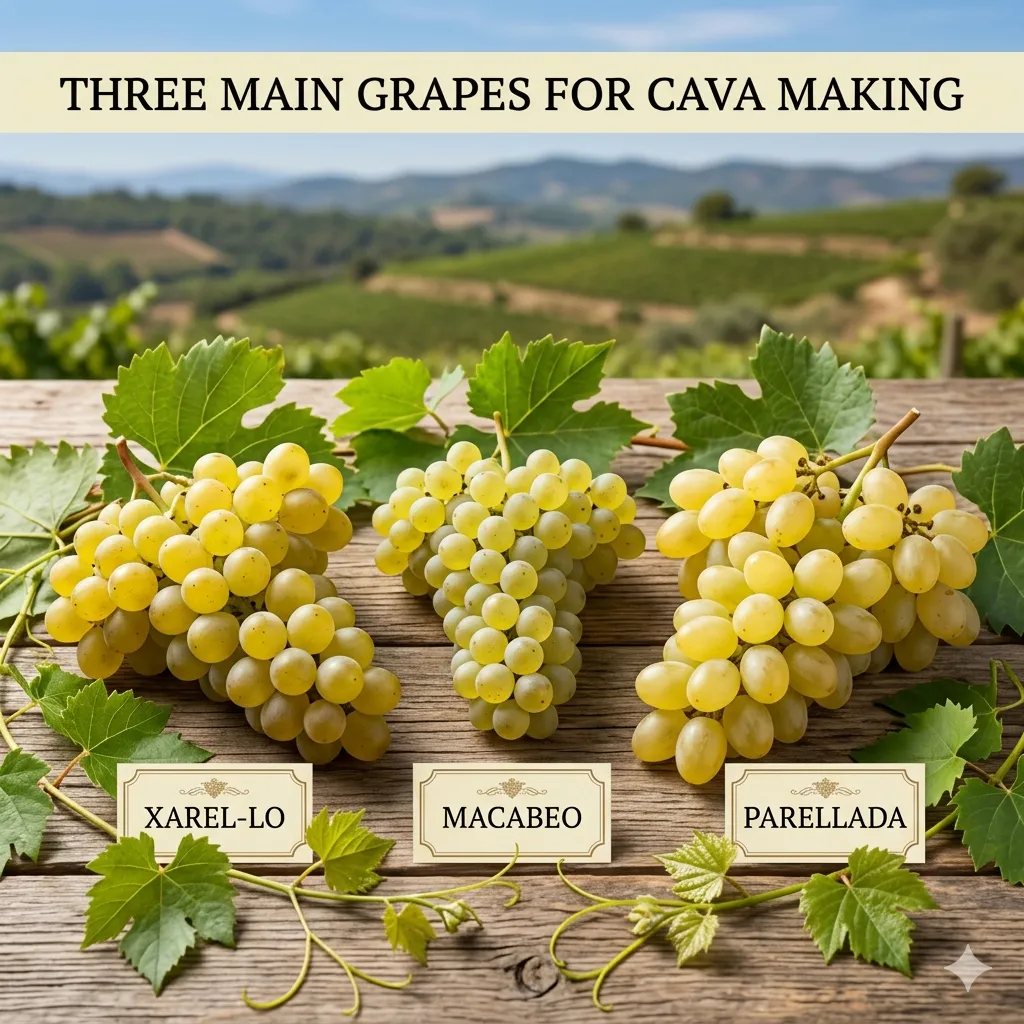
Cava is often made with a blend of grapes, with the three most typical ones below 4:
Xarel·lo is often the most distinctive grape in the classic Cava blend. It tends to bring structure, herbal or fennel-like notes, and ageing potential.
Macabeo often brings a softer, more generous profile. It can show notes like honey, peach, and broadness.
Parellada is usually associated with lighter, more delicate, more floral qualities.
You may sometimes see Integral Producer or Elaborador Integral on a bottle. This is a quality cue used in Cava to identify producers who carry out the full winemaking process themselves 5. It was introduced as part of a push towards more transparency and higher quality in cava winemaking.
That does not guarantee greatness on its own, but it is still a useful signal. It suggests a higher level of control over the wine from grape to finished bottle, and for beginners it can be one of the easiest positive signs to spot.
If you are comparing two bottles at similar prices and one has this seal, it is worth noticing.
One of the most useful things to understand about Cava is that the category contains both:
That can confuse beginners because the same word, Cava, covers a lot of ground.
A practical way to think about it:
For many beginners, Reserva is the best place to start if you want to see what serious Cava can do without jumping to the very top tier. Reservas can also typically be found for a good value.
Before you buy, ask:
Learning to read a Cava label is less about memorizing rules and more about learning which details actually predict the drinking experience. If you understand dryness, ageing tier, and producer ambition, it becomes easier to find a bottle that fits your mood that day.
After a first fermentation in large tanks or barrels, the wine undergoes a second fermentation within smaller bottles, ageing with the yeast “on the lees” ↩
Disgorgement is when the yeast from the second fermentation is expelled from the bottle ↩
I do have a preference for dessert wines generally as well ↩
There has also been more Chardonnay and Pinot Noir usage ↩
They can buy grapes, which is historically a common practice in the region, with many small vineyards and growers selling grapes to larger winemakers ↩

Notes from the industry tasting event in NY

A beginner-friendly guide to the main styles of Port

A beginner-friendly guide to the differences between Cava and Champagne, including grapes, style, price, and when to buy each
Comments